+91 9090 0707 82
 info@avanaseniorcare.com

If you’re living abroad and your parents are in Kiwale (PCMC belt), Pune, the decision isn’t only “Which option costs less?” The real question is: which option stays safe, consistent, and emotionally healthy when you’re not physically present?
This guide is written to make the decision easier using a practical framework NRIs can apply in just 10 minutes.
Quick Summary (for busy NRIs)
- Home care = Care is added to an existing home (family usually manages the system).
- Assisted living = The home is designed around care (a managed system with routines, safety, staff, meals, and support).
Many families begin with home care because it feels familiar. Many switch later because reliability becomes the issue — night-time support, replacements, supervision, emergencies, or loneliness.
What You Actually Get: Home Care vs Assisted Living
1 Home Care in Kiwale / Ravet / Punawale
Home care typically means a caregiver or nurse coming in shifts (or live-in support). In most setups, the family still ends up managing:
- Hiring and supervision (and defining what “good care” looks like daily)
- Replacement arrangements when staff is sick or on leave
- Doctor coordination, medicines, tests, and follow-ups
- Home safety upgrades (bathroom rails, lighting, anti-slip, emergency setup)
Home care can work well, but it depends heavily on consistent people and strong supervision.
2- Assisted Living in Kiwale / Pune
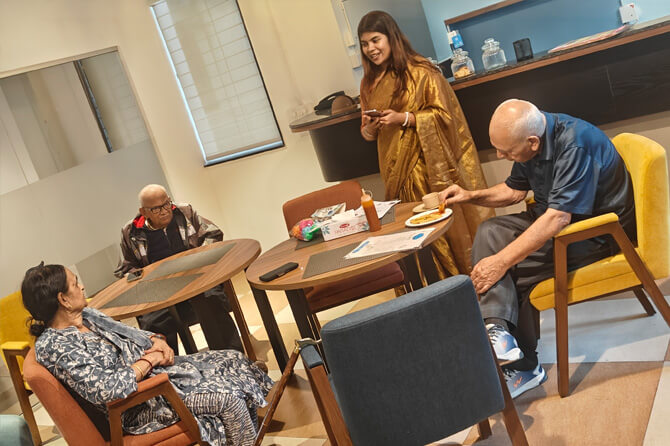
Assisted living usually bundles the full ecosystem:
- 24×7 staff availability and supervision
- Help with daily activities (bathing, dressing, mobility, meals)
- Meals, housekeeping, laundry, and maintenance
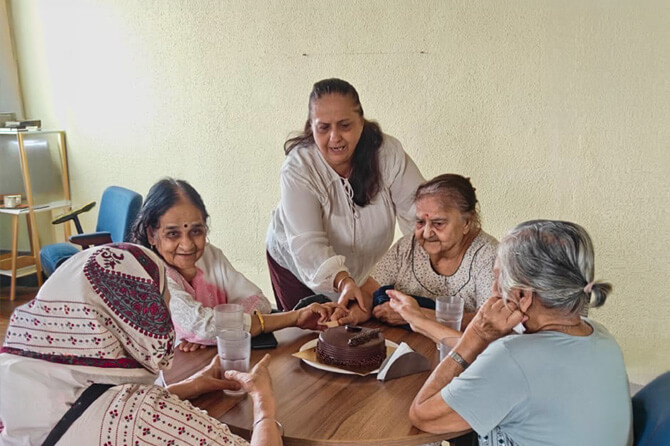
- Activities, companionship, and daily routine
- Basic medical oversight and escalation protocols
In simple terms: home care is a service. Assisted living is a system built on processes that run consistently, reduce gaps, and keep improving over time.
Cost Comparison (Typical Monthly Ranges)
Costs vary based on care needs, hours, room type, and service standards. Use these as decision anchors — not final quotations.
Home Care (24×7)
- Live-in attendant (non-medical): ₹35,000 – ₹50,000/month
- 2-shift extended coverage: ₹60,000 – ₹90,000+/month
- Nurse-led care for higher medical needs: ₹70,000 – ₹1,20,000+/month
- 2-shift extended coverage: ₹1,50,000 – ₹2,40,000+/month
Premium Assisted Living
- Often starts around ₹60,000/month and varies upward depending on room type and care tier.
NRI Tip: Home care can look cheaper at first, but costs rise once you add night coverage, replacements, supervision, and emergency reliability.
Premium assisted living may seem expensive, but the base package usually includes trained staff, meals, daily support, housekeeping, laundry, doctor-on-call support, emergency response protocols — all managed as one system.
The Hidden Cost NRIs Feel Most: Reliability
When you’re abroad, even small gaps become big risks:
- Delayed shift changes
- Inconsistent replacement staff
- Missed medicines or delayed meals
- Falls at night
- Slow decline from loneliness (less movement, lower appetite, low mood)
Ask yourself one question that changes the decision:
“If my parent skips breakfast and looks low, who notices, and who escalates?”
That day-to-day attentiveness is often the biggest difference between a care system (assisted living) and a caregiver arrangement (home care).
The NRI Decision Framework (10 Minutes)
Step 1: Put your parent into a care level
- Level 0: Independent; needs convenience
- Level 1: Needs help with 1–2 daily activities (ADLs)
- Level 2: Needs supervision + medication routine
- Level 3: Needs night monitoring / frequent medical attention / cognitive risk
Rule of thumb: If your parent is Level 2 or Level 3, they usually need a system — meaning an assisted living facility — because reliability matters more than hours and money.
Step 2: Calculate home care honestly (most NRIs undercount this)
- Do you need one live-in caregiver or two-shift coverage?
- Who provides backups in emergencies or leave?
- Who checks quality daily (food, hydration, mobility, mood, medicine adherence)?
- Are home safety upgrades done (bathroom, stairs, lighting)?
Step 3: Choose an oversight model (non-negotiable for NRIs)
If choosing Home Care:
- Assign an on-ground “care captain” (relative, neighbour, or paid care manager)
- Daily WhatsApp updates (meals, medicines, walk, mood)
- Weekly video review + monthly doctor summary
If choosing Assisted Living:
- Know about the founder of the facility
- Understand the care team involved
- Ask how safety is ensured
- Escalation matrix (family call vs hospital transfer)
- Clear care tiers as needs change
- Trial stay, if possible
Which Option Is Better for Your Parents in Kiwale?
Choose Home Care if ALL are true:
- Parent is Level 0–1
- Home is senior-safe or can be modified immediately
- Reliable on-ground care captain is available
- Agency provides consistent replacements
- Loneliness is not affecting appetite, sleep, or movement
Choose Assisted Living if ANY are true:
- Falls risk or mobility decline
- Medication complexity or chronic condition monitoring
- Night-time supervision is needed
- Early cognitive changes or anxiety
- Visible loneliness affecting health
- Family coordination is becoming exhausting
Try Before You Decide: The Safest NRI Approach
- 2–4 week respite or short stay
- Track appetite, sleep, mood, walking, social engagement
- Decide with data, not fear
FAQs
1- Is assisted living in Pune always more expensive than home care?
Not always. If night supervision, rotating shifts, or nurse-led care is needed, home care costs can rise quickly. Assisted living can become cost-competitive because services are bundled.
For NRIs, the peace of mind from a professionally run assisted living facility with clear processes is often unmatched.
2- What’s the biggest advantage of assisted living for NRIs?
Reliability and routine. When you’re abroad, the risk isn’t care cost — it’s care gaps. A managed system reduces dependency on single individuals.
3 What’s the biggest risk with home care?
Inconsistent replacements and supervision drift. Care may look “present,” but outcomes can decline without strong oversight.
4- How do I decide quickly?
If your biggest fear is “What if something happens at night?” or you’re seeing falls risk, confusion, or loneliness impacting health — assisted living usually becomes the safer decision.