 +91 9090 0707 82
 info@avanaseniorcare.com
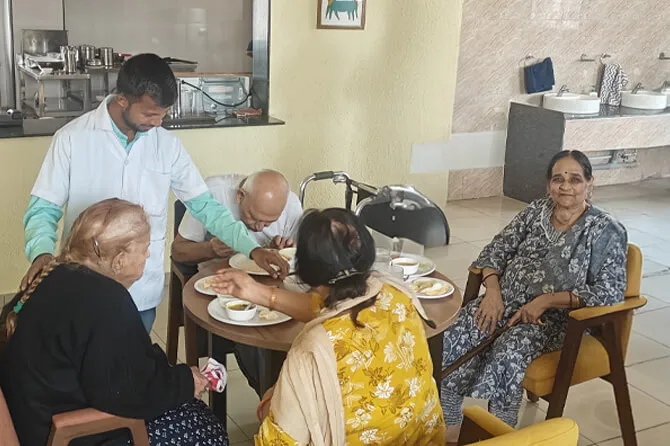
Memory is not just about recalling the past, it’s about feeling connected to who we are, Imagine your brain as a bookshelf. Over time, some of the books get misplaced, and others lose their pages. That’s what dementia can feel like, and when memory begins to blur, it can unsettle the very roots of a family.
We notice it in small ways first, forgotten names, misplaced keys, a recipe your mother once knew by heart now missing a step. At first, it feels like just another sign of growing older. But when the confusion deepens, when words escape and days seem to merge, a quiet worry begins to grow:
Could this be dementia?
Across India, this question is becoming more common than ever before. As our population ages, dementia is no longer a rare condition tucked away in medical journals, it is part of the new landscape of eldercare.
According to published research, around 7.4% of Indians aged 60 and above, roughly 8.8 million people, are living with dementia, with numbers expected to rise significantly in the coming decades.
In India, A country known for rich culture, heritage, values and large population, families are increasingly seeking guidance on how to recognize, manage, and care for loved ones facing memory related illnesses. And that’s where awareness begins not in panic, but in understanding.
Understanding Dementia and Alzheimer’s
Imagine a once-vibrant library filled with stories, shelves stacked high with moments, names, faces, and emotions. Each book tells a part of who a person is. Over time, though, the pages begin to loosen, the ink starts to fade, and some of the shelves grow dim. That is exactly what dementia is, not an instant disappearance of knowledge or memory, but a slow, quiet rearranging of them. The stories remain, but sometimes they’re harder to reach.
Dementia is not one single disease; it’s an umbrella term used to describe a group of symptoms that affect memory, thinking, reasoning, and social abilities severely enough to interfere with daily life. It is caused when brain cells are damaged and can no longer communicate effectively with each other. The most common of these is Alzheimer’s disease, which accounts for nearly 60-70% of dementia cases.
Understanding dementia also means understanding what it is not. It is not a normal part of aging though age is a major risk factor. It is not a sudden onset, it unfolds slowly, often over years. And it is not the same for everyone. Each journey is unique, shaped by the individual’s personality, environment, and the kind of support they receive.
The early signs are subtle, forgetting recent events, repeating questions, losing track of time or place. Families may dismiss them as normal aging, but with dementia, these changes grow deeper and more persistent.
One of the most heartbreaking misconceptions in India is that dementia is a “normal” part of aging. It isn’t. Forgetfulness happens to everyone occasionally, but dementia represents something much more deeper.
Recognizing the Early Warning Signs
It often begins softly, like a note gone slightly off-tune in a familiar song. Families notice it first, almost instinctively. A repeated question, an unkept appointment, a misplaced key that somehow feels like more than forgetfulness.
A person may begin to lose their place in conversations, struggle with once-effortless recipes, or get lost on roads they knew by heart. These are not just lapses in memory, but small disconnections from the everyday life.
As time moves on, the disorientation deepens. Morning and evening trade places. A festival long past might feel like tomorrow. Someone might wake at midnight, convinced it’s time for work. Alongside confusion, emotions too begin to tremble, irritability, quiet withdrawal, suspicion, moments of unprovoked fear.
When these signs linger, it is time to listen closely and seek help. Early recognition doesn’t just prepare families for care, it helps preserve what still remains clear and steady in a person’s world.
Treatment and Management: Blending Medicine with Meaningful Care
The journey from diagnosis to daily life with dementia can feel like stepping into unfamiliar light. But understanding of what’s happening brings calm to the situation.
Though no cure yet exists, dementia can be managed. Medicine plays its role, completely under the supervision of a specialized doctor, but it is often the gentler, non-medical threads that hold life together. Routines that anchor the day. Calendars that remind, not just of dates, but of purpose. Music that revives memory through melody. Art that gives shape to emotion when words recede.
Occupational therapy can transform the home into a sanctuary, safe, but never stripped of warmth. Management is not merely treatment; it is the art of preserving identity through understanding, creativity, and care.
The Caregiver’s Journey: Love and Finding Balance
In India, families are the primary caregivers for most people living with dementia. Sons, daughters, spouses, each taking turns to hold the fragile threads together. Love becomes their language, but exhaustion, too, becomes a companion. The constant watching, feeding, reminding may even thin the strongest hearts.
Caregivers often wrestle with invisible burdens: guilt for feeling tired, sadness for what is lost, fear for what lies ahead. Yet, it must be said, one cannot offer care while running on empty.
Across Pune, small circles of hope are forming. Support groups at DM Hospital, Mansa Clinic, and independent networks like Kshetra and Dementia Care Notes are some to consider.
A few quiet reminders for those who care:
- Create calm, predictable spaces.
- Let music and photographs speak when words no longer reach.
- Do not argue, gently redirect instead.
- Remember: behaviour is often communication, of hunger, pain, confusion, or fear.
- Seek medical advice before medicating distress.
Caring for someone with dementia is not an act of endurance alone, it is a shared human story of patience, and grace. And no one should have to live it alone.
Making the Home Safe and Supportive
As dementia progresses, safety becomes a quiet but constant concern, but Safety doesn’t have to mean sterility, a home can be both secure and soft, adapted yet familiar. Small, thoughtful changes can make a home dementia-friendly while preserving comfort.
- Remove rugs or wires that may cause tripping.
- Install grab rails and night lights.
- Label rooms or use contrasting colors for orientation.
- Secure hazardous areas like kitchens.
- Use identification bracelets for those prone to wandering.
For those who wander or become disoriented, simple identifiers like name bracelets or door alarms can make a big difference. The idea is not to restrain, but to reassure.
Occupational therapists can guide families in these modifications, helping to balance safety with a sense of normalcy.
Respite or Short term care in Pune
Sometimes, even the most loving families need rest. Respite care through short stays or day programs offers families a pause without breaking the chain of care. In Pune, many assisted living centres and memory care units now extend this option, ensuring continuity for the person with dementia while allowing caregivers to breathe, recover, and return with renewed strength.
For advanced stages, residential or assisted living facilities with dedicated memory care may be a compassionate choice. These centres provide round-the-clock support, dementia-trained staff, structured routines, and safe, calming environments. When evaluating options, look for staff qualifications, emergency protocols, hospital tie-ups, and activity-based care plans rather than purely medical supervision.
Conclusion
Dementia may steal recollection, but it doesn’t erase the capacity for love or connection. Even when words fade, emotions remain. A familiar song, a gentle touch, a shared meal, these become bridges between what was and what still is.
Families often find unexpected grace in this journey. Moments of recognition, bursts of laughter, the simple joy of being together, they remind us that memory may falter, but the human spirit does not.
Dementia changes people, but it doesn’t erase them.
In Pune, as awareness deepens and memory care services expand, families are finding hope, not in curing dementia, but in caring for it better. With the right knowledge, planning, and compassion, it’s possible to create a life of comfort and relief for those walking this path.
Because when memories fade, care remembers.
For More Information, Speak with Our Senior Care Advisor Today
Call: +91 9090 0707 82


